
Table of Contents
ToggleMedical Abortion Pills
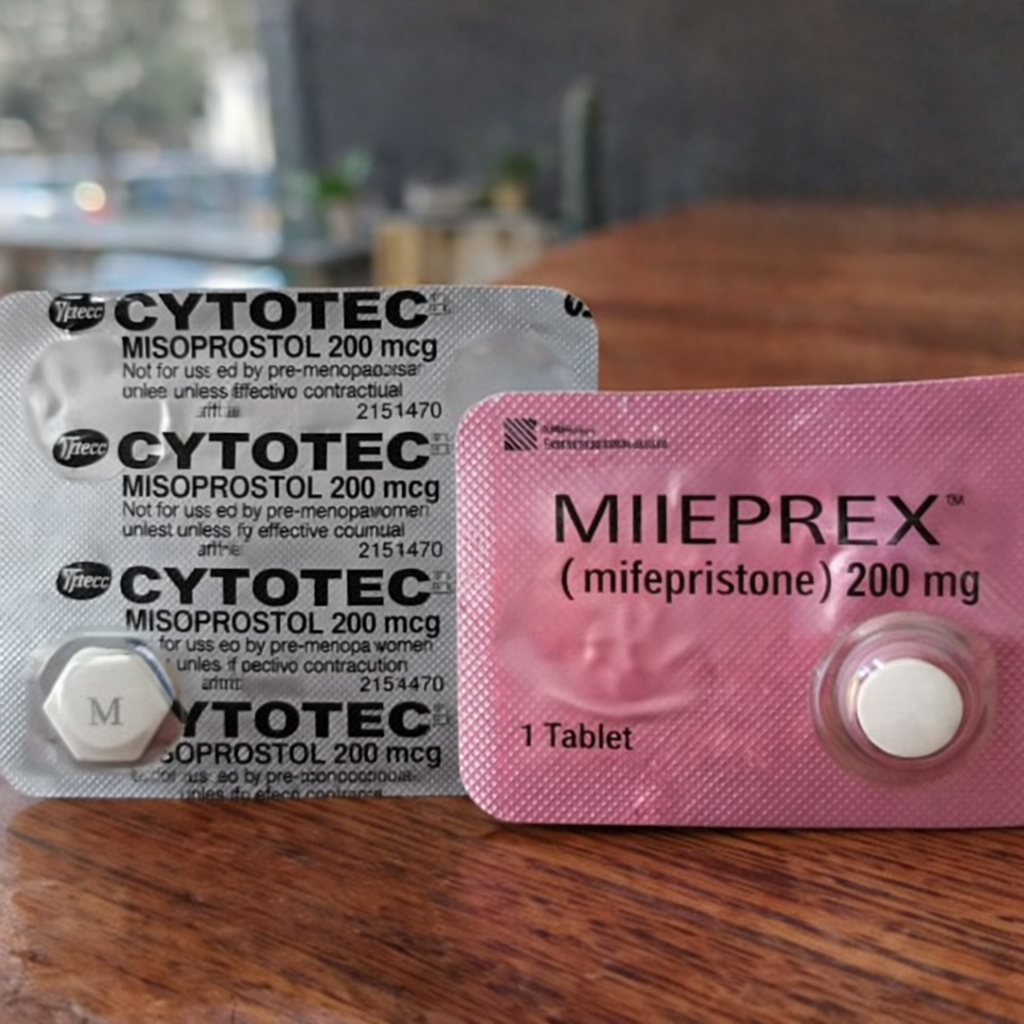
Medical abortion pills are prescription medicines, mifepristone and misoprostol, and are used to end a pregnancy without surgery, typically taken up to 9 to 12 weeks of pregnancy.
Both mifepristone and misoprostol are listed as “Core” medications on the WHO Model List of Essential Medicines, recognizing them as essential, evidence-based treatments for safe termination of pregnancy and miscarriage management. [1]
At A Glance
How Do They Work?
Mifepristone: The first pill to be taken; it blocks progesterone, the hormone needed to support the pregnancy. Without progesterone, the pregnancy can not survive.
Misoprostol: Taken 24 – 48 hours later, it causes the uterus to contract and helps the cervix soften, allowing the pregnancy tissue to pass, similar to a miscarriage.
How Effective Are Medical Abortion Pills?
Medical abortion pills are an effective in ending an early pregnancy. According to Ipas clinical guidance, the combination of mifepristone and misoprostol has reported success rates of 95–98% for pregnancies up to nine weeks.
Factors That Influence Effectiveness
- Pregnancy duration: The likelihood of treatment failure, particularly an ongoing pregnancy, increases as pregnancy progresses. This makes accurate estimation of pregnancy duration important.
- Medicines used: The combination of mifepristone and misoprostol is generally more effective than misoprostol alone.
- Treatment regimen: The recommended dosage, timing and method of taking the medicines can affect the outcome.
- Quality of medicines: Using quality-assured medicines is important for achieving the expected treatment outcome.
- Individual medical circumstances: Certain health conditions or complications, including an undiagnosed ectopic pregnancy, may affect the treatment process.
Who Can Use Abortion Pills?
Abortion pills may be suitable for individuals seeking to terminate an early pregnancy, but eligibility depends on how far the pregnancy has progressed, the person's medical history and the availability of appropriate healthcare support.
Key Eligibility Criteria
1. Gestational Age: This is one of the main factors considered when assessing eligibility for a medical abortion. The World Health Organization (WHO) recommends self-management of medical abortion before 12 weeks of pregnancy as an option.
- Being beyond 12 weeks does not automatically mean that medical abortion is impossible. However, later pregnancies require a different treatment approach and appropriate assessment by a trained healthcare provider.
2. Medical Factors: Certain medical conditions or circumstances may affect whether medical abortion is suitable or whether additional medical assessment is needed. Inform a healthcare provider about any of the following before using abortion pills:
- Suspected ectopic pregnancy: Abortion pills do not treat a pregnancy that develops outside the uterus.
- Previous allergic reaction: A history of an allergic reaction to mifepristone or misoprostol.
- Bleeding disorders or severe anaemia: These conditions may increase the risks associated with bleeding and require careful medical assessment.
- An intrauterine device: If you have an IUD in place, it should be removed before starting the medical abortion treatment.
Access to medical abortion pills and related healthcare services may differ between South Africa, Namibia, Zambia and Eswatini. A qualified healthcare provider can explain the options and guidance available in your country.
How to Access Medical Abortion Pills
Globally, people access abortion medications through several primary medical and community pathways. Options vary by local healthcare systems, medical regulations, and personal circumstances.
- Public Hospitals. In countries where abortion is allowed, Individuals can visit reproductive health clinics or public hospitals to access abortion services. Sometimes free of charge.
- Pharmacy Access. Depending on local medical regulations, individuals may be able to purchase abortion medications directly from a pharmacy. In some places, pharmacists are authorized to dispense the pills after a brief consultation, while in others, misoprostol is available over the counter without a prescription. [1]
- Telehealth and Online Consultations. Many healthcare providers offer online abortion consultations via phone, video call, or secure online questionnaires. After reviewing a person’s medical history and pregnancy timeline, a clinician may prescribe abortion pills for discreet delivery to their home or collection from a pharmacy, where permitted.
what to expect
What to Expect When Using Abortion Pills
The process of using abortion medication is also known as a medical abortion, and what happens during the process depends on where the pills are taken. ( At home / at the clinic )
Before Starting Treatment
Before starting a medical abortion, whether at a clinic or through self-managed care at home, a consultation with a qualified healthcare provider is recommended. This helps assess the pregnancy, review your medical history and determine whether medical abortion is a suitable option.
1. Pregnancy Confirmation: A urine or blood pregnancy test may be performed to confirm the pregnancy. An ultrasound scan to determine how far along the pregnancy is, depending on your circumstances and clinical assessment.
2. Medical Assessment: A healthcare provider will review your medical history and ask about any existing health conditions, medications you are taking, allergies or previous medical complications that may affect the safety of medical abortion.
3. Informed Consent: Before proceeding, the healthcare provider should explain how the medical abortion process works, what to expect, possible side effects and complications, and how to care for yourself during recovery.
What to Expect During the Process
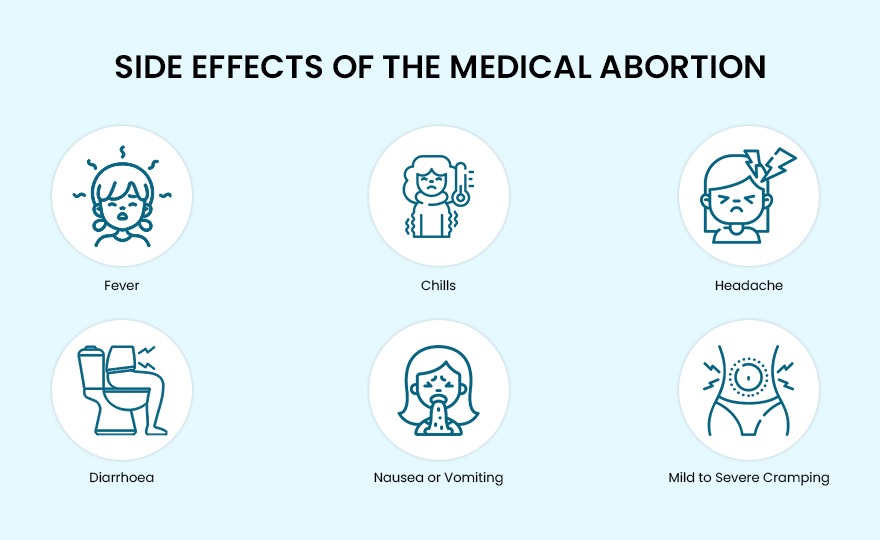
Nausea, vomiting, diarrhea, chills, and headache are usually temporary and settle on their own. [1]
How to Care for Yourself After a Medical Abortion
Taking care of yourself after an abortion is important for your physical recovery and emotional well-being. As your body recovers, you may experience physical symptoms or changes in how you feel emotionally. Understanding what to expect and knowing how to look after yourself can help make the recovery process more comfortable.
Physical Care
Managing side effects, resting, and monitoring your symptoms can help you recover comfortably. To reduce the chance of infections, avoid:
- using tampons
- having penetrative sex
- putting anything in the vagina
- using swimming pools
Emotional Care
After terminating a pregnancy, hormone levels gradually change as your body returns to its usual state. That change may contribute to mood fluctuations. Some people feel relieved, while others may feel sad, guilty, or upset.
You can navigate these feelings by acknowledging your emotions without judging yourself, and practicing self-compassion can help you through this period. If feelings of sadness, guilt, or distress persist or become difficult to manage, consider seeking emotional support from a qualified healthcare professional or counsellor.
When to Call the Doctor
Most people recover well after a medical abortion. However, it is important to know which symptoms need medical attention. If you notice any of the following, contact a healthcare provider:
Very heavy bleeding or bleeding that worries you.
Severe or worsening abdominal pain.
Fever that lasts more than 24 hours after taking misoprostol.
Foul-smelling vaginal discharge.
Little or no bleeding after taking misoprostol.
Pregnancy symptoms that continue or do not improve.
Frequently Asked Questions
How Effective Are Abortion Pills?
Lorem ipsum dolor sit amet, consectetur adipiscing elit. Ut elit tellus, luctus nec ullamcorper mattis, pulvinar dapibus leo.
How Do I Know the Abortion Was Successful?
What Happens If the Pills Do Not Work?
In the roughly 2% of cases where the pregnancy does not pass completely, a clinician will offer a repeat dose of misoprostol or a quick in-clinic aspiration procedure. Reputable telehealth networks maintain partnerships with physical clinics to help arrange follow-up care if needed.
Can Abortion Pills Affect My Fertility?
No, an uncomplicated medication abortion has no impact on future fertility. In fact, ovulation can resume as early as 8 to 10 days after the abortion, meaning you can become pregnant again very quickly if you do not use contraception.
A Medical abortion is a safe and effective way to end a pregnancy, and having the right information can help you feel more prepared. If you need this procedure, know you’re not alone. WomensMedic can connect you with resources to help you access abortion services in South Africa, Namibia, Zambia and Eswatini process any emotions you may feel throughout the experience and also make sure you’re comfortable and receiving the care you need.

Medically reviewed by: Dr. Nelisiwe Mbele, DNB (Obstetrics and Gynaecology).
Medical Disclaimer: This content is for educational purposes only and does not replace professional medical advice, diagnosis, or treatment.
- World Health Organization. (2025). Abortion Care Guideline, 2nd ed. Retrieved from https://www.who.int/publications/i/item/9789240101596
- Republic of South Africa. (1996). Choice on Termination of Pregnancy Act 92 of 1996. Retrieved from https://www.gov.za/documents/choice-termination-pregnancy-act
- National Department of Health, South Africa. (2020). National Clinical Guideline for Implementation of the Choice on Termination of Pregnancy Act. Retrieved from https://knowledgehub.health.gov.za/elibrary/national-clinical-guideline-implementation-choice-termination-pregnancy-act-2020
- Endler, M., et al. (2020). Telemedicine for medical abortion: a systematic review. Retrieved from https://pmc.ncbi.nlm.nih.gov/articles/PMC7496179/