
Table of Contents
ToggleAbortion Services
Abortion services refer to the full range of medical, surgical, and supportive healthcare provided when an individual needs to terminate a pregnancy or manage post-abortion care.
Whether you are exploring your options or seeking abortion care in South Africa, Namibia, Zambia, and Eswatini, WomensMedic, provides reliable information, confidential guidance, and access to appropriate healthcare support, including remote consultations where available.

What is a Safe Abortion?
A safe abortion is an abortion carried out using a method recommended by the WHO, appropriate to the pregnancy duration, and provided by someone with the necessary skills.
Safe abortions can be provided either with abortion pills, known as a medical abortion, or through a simple procedure in a clinic, known as a surgical procedure.
What to Know Before an Abortion
Before getting an abortion, you should know that the procedure is very safe, highly effective, and available in two types: medical (using pills) and surgical (in-clinic procedure).
- It is advisable to know how many weeks pregnant you are (gestational age) to determine the right procedure for your individual circumstances.
Use the pregnancy calculator below to estimate how many weeks pregnant you may be.
Pregnancy Weeks Calculator
Find out approximately how many weeks pregnant you may be by entering the first day of your last menstrual period.
Your Pregnancy Estimate
Based on the first day of your last menstrual period, your estimated pregnancy duration is:
Now that you have an estimate of how many weeks pregnant you are, you can explore the abortion options available at different stages of pregnancy. Below, we explain the different types of abortion, including the options available at different stages of pregnancy.
Types of Abortion
01.
Tele-abortion
Under 9 Weeks

Tele-abortion is a way of accessing abortion care remotely, without visiting a clinic. You may consult online and, if eligible, order abortion pills online and use them at home under remote medical supervision.
02.
Medical Abortion
9 to 12 Weeks

Medical abortion uses medicines, usually mifepristone and misoprostol, to end a pregnancy. The medicines work together to stop the pregnancy from developing and cause the uterus to expel the pregnancy tissue.
03.
Surgical Abortion
12 - 20 Weeks
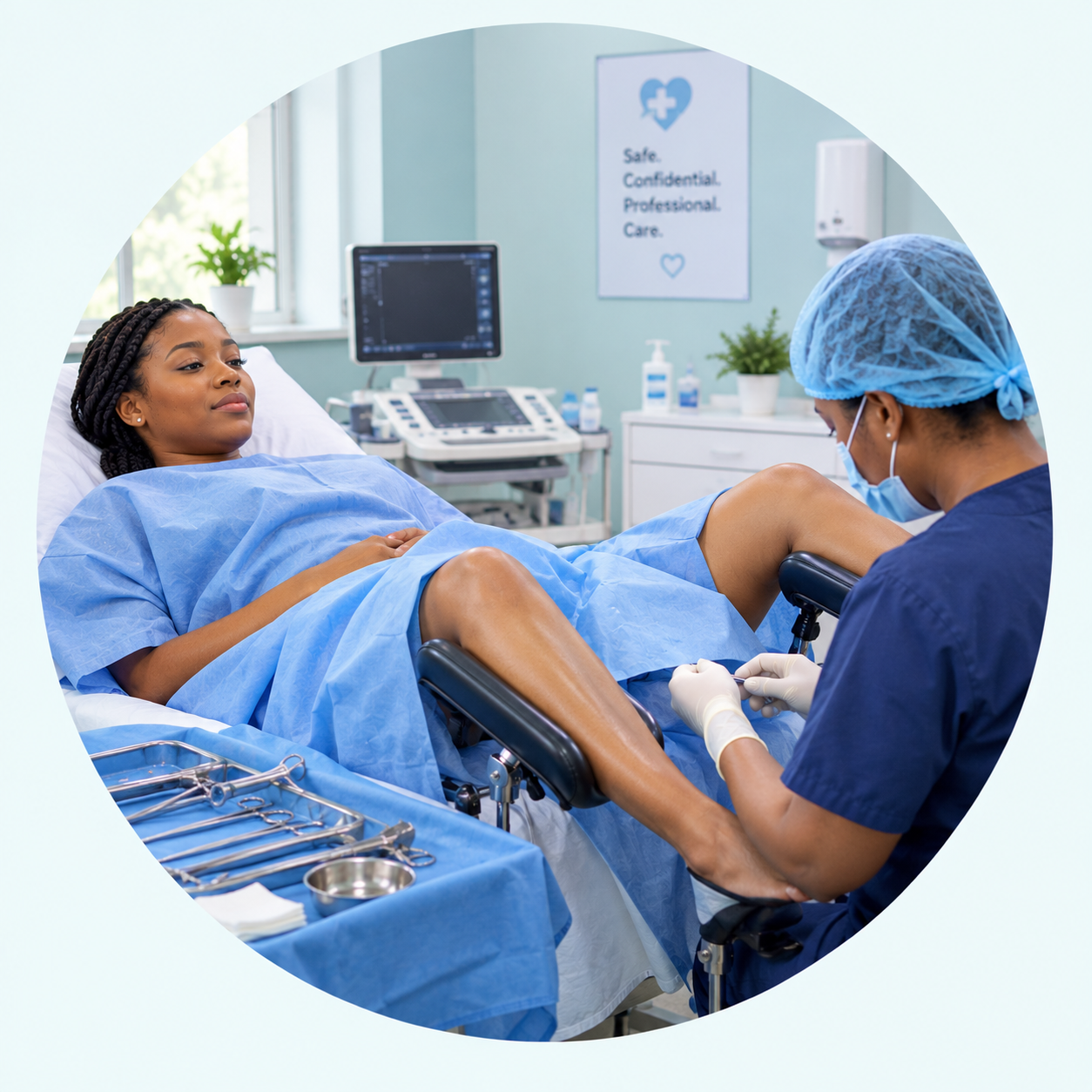
A surgical procedure (vacuum aspiration) uses local anesthetics injected into or around the cervix and other medical instruments like a speculum, inserted through the vagina to remove the pregnancy tissue.
What Happens During Abortion
Before Your Appointment
Before your appointment, you may be asked about your medical history, the date of your last menstrual period and any existing health conditions or medications. This helps the healthcare professional assess your circumstances and determine the appropriate care.
01.
During Medical Abortion
-
First Pill (Mifepristone):
You swallow mifepristone (at the clinic or at home). It blocks progesterone, a hormone needed for the pregnancy to continue growing. -
Second Pill (Misoprostol):
Misoprostol is usually taken 24 to 48 hours after mifepristone, as directed by your healthcare provider. It causes the uterus to contract and helps the pregnancy tissue pass. -
What to Expect:
You may experience nausea, vomiting, diarrhoea, chills, a temporary fever or dizziness. These side effects usually improve with time.Cramping and bleeding usually begin within a few hours of taking misoprostol. The cramps may be stronger than period cramps, and the bleeding may be heavier than a normal period.
02.
During Surgical Abortion
-
The Procedure:
During a suction abortion, the doctor uses a speculum to view the cervix. If necessary, the cervix is gently widened before a small suction tube is used to remove the pregnancy tissue from the uterus. -
What It Feels Like:
The suction procedure often takes about 5 to 10 minutes, although the total appointment takes longer. You may experience cramping similar to strong period pains during the procedure. The level of discomfort varies from person to person. -
What to Expect:
You may experience cramping, pressure or a pulling sensation during the procedure. Some people also feel light-headed or experience nausea, particularly if they feel anxious or have received certain medications. Light bleeding or spotting may occur afterwards. These experiences vary from person to person.
How Much Does an Abortion Cost?
The cost of having an abortion varies depending on the country, the type of procedure, and how far along the pregnancy is (gestational period).
The table below provides an estimated comparison of abortion costs in both countries. These figures are intended as general price guides rather than fixed fees. Confirm actual costs directly with the healthcare provider.
| Abortion Type | Gestational Age | Estimated Cost (U.S.) | Estimated Cost (South Africa) |
|---|---|---|---|
| Telehealth / Online Pill | Up to 10–11 weeks | $150 – $500 | R2,100 |
| In-Person Abortion Pill | Up to 10–11 weeks | $350 – $800 | R1,500 – R4,600 |
| First-Trimester Surgical | Up to 12–14 weeks | $600 – $800 | R2,200 – R4,950 |
| Second-Trimester Surgical | 14 weeks and beyond | $715 – $2,000+ | R4,000 – R7,950+ |
Where and How to Access Abortion Services
-
Public Healthcare Services
Public clinics and hospitals may provide abortion services in countries that allow abortion. Healthcare professionals can explain the services offered, assess your circumstances and guide you on the next steps. Some public healthcare services are free or low-cost. -
Private and Non-Profit Healthcare Providers
Private clinics and non-profit organisations also provide abortion information, consultations and care. These providers may offer different services depending on their location and healthcare arrangements. -
Accessing Care Through WomensMedic
WomensMedic is a digital reproductive and sexual healthcare provider offering confidential remote consultations, professional guidance and support to help individuals understand their options and access appropriate care.You can contact us through WhatsApp to enquire about abortion services in South Africa, Namibia, Zambia and Eswatini. In-person healthcare services are also available in Johannesburg and Gauteng.
Available services and arrangements depend on your location, individual circumstances, applicable requirements and clinical assessment.
How to Find a Safe Abortion Provider
To find a safe, legal abortion provider, you can use verified directories, contact local public health agencies or ask trusted friends or family members for recommendations. Choose a healthcare provider like WomensMedic that offers reliable information, qualified professional guidance and access to appropriate care, whether remotely or in person.
Consider whether they offer:
- Remote Consultations: Confidential access to professional support where available.
- Evidence-Based Care: Abortion information and services guided by recognised medical standards.
- Healthcare Navigation: Clear guidance on available options, eligibility and how to access appropriate care.
- Ongoing Support: Follow-up guidance, aftercare and access to medical assistance when needed.
⚠️ Abortion Safety Warning
Avoid unregulated abortion providers and buying abortion pills from unverified sellers advertising on social media, street poles, or through informal street vendors.
The medication they offer may be counterfeit, expired, or improperly stored.
Choose a provider who can explain your treatment, provide reliable contact details, and arrange appropriate medical support.
Find Abortion Services in Your Country
According to the Center for Reproductive Rights, abortion laws vary between countries. Eligibility for an abortion may depend on how far along the pregnancy is (gestational age) and the laws of the specific country where the person seeks care.
Recovery and Aftercare
Recovery after an abortion varies from person to person. Understanding what to expect can help you prepare for the healing process, including physical changes, emotional well-being and any follow-up care you may need.
-
Physical Healing
Cramping and light bleeding or spotting are common for a few days to a couple of weeks. Follow your healthcare provider's advice on using sanitary pads, tampons, sexual intercourse, and bathing during recovery. -
Emotional Recovery
Emotional responses after an abortion vary from person to person. You may experience relief, sadness, uncertainty, or a mixture of feelings. Give yourself time to process your emotions and consider speaking with someone you trust or a qualified counsellor if you need support. -
Follow-Up Care
You may need a follow-up appointment or test, such as a specific urine or blood test, after 1 to 3 weeks to confirm that the abortion is complete. Follow the timing and instructions provided by your healthcare provider.
When to Seek Medical Attention
Contact a healthcare provider urgently if you experience any of these warning signs:
- Heavy bleeding that soaks through two full-sized sanitary pads per hour for two consecutive hours.
- Passing very large blood clots.
- A high fever or severe chills.
- Foul-smelling vaginal discharge or severe, persistent pain that does not improve with medication.

Medically reviewed by: Dr. Nelisiwe Mbele, DNB (Obstetrics and Gynaecology).
Medical Disclaimer: This content is for educational purposes only and does not replace professional medical advice, diagnosis, or treatment.
- World Health Organization. (2025). Abortion Care Guideline, 2nd ed. Retrieved from https://www.who.int/publications/i/item/9789240101596
- Republic of South Africa. (1996). Choice on Termination of Pregnancy Act 92 of 1996. Retrieved from https://www.gov.za/documents/choice-termination-pregnancy-act
- National Department of Health, South Africa. (2020). National Clinical Guideline for Implementation of the Choice on Termination of Pregnancy Act. Retrieved from https://knowledgehub.health.gov.za/elibrary/national-clinical-guideline-implementation-choice-termination-pregnancy-act-2020
- Endler, M., et al. (2020). Telemedicine for medical abortion: a systematic review. Retrieved from https://pmc.ncbi.nlm.nih.gov/articles/PMC7496179/
Frequently Asked Questions
How safe is having an abortion?
Abortion, when done using the recommended methods, is a very safe procedure. According to the National Abortion Federation, early first-trimester abortions have fewer complications compared to later on in the pregnancy.
. Will having an abortion affect my fertility?
No. A safe, uncomplicated abortion does not affect your ability to get pregnant or carry a healthy pregnancy in the future. Medical evidence confirms there is no link between safe abortions and subsequent infertility, miscarriage, or birth complications. [1]
How much pain and bleeding should I expect?
Abortion Pills: You will experience heavy bleeding and strong cramping as the pregnancy tissue passes, usually peaking 4 to 5 hours after taking the second medication.
Surgical Abortion: You may feel mild to intense cramping during the suction, which typically subsides quickly afterward.
. How do I know if the abortion was successful?
- For procedures: The clinician will confirm completion immediately after the extraction.
- For the pill: You will generally be advised to take a special, low-sensitivity home pregnancy test or return for a follow-up appointment exactly 3 weeks after taking the medication. Testing too early can result in a false positive because pregnancy hormones take a few weeks to completely leave your body. [1, 2, 3]
Can I get an abortion without telling my parents?
This depends heavily on the laws of your specific country or state. In many regions, mature minors have the legal right to confidential reproductive healthcare, meaning parental consent is not required. In other regions, laws mandate parental notification or consent, though these areas often have a “judicial bypass” option where a judge can grant permission instead.
Do I need family planning after abortion?
Yes, you should start family planning or birth control immediately after an abortion if you want to avoid another pregnancy. Ovulation can happen as early as 5 to 11 days after an abortion