
Table of Contents
ToggleSafe Abortion in South Africa
If you are considering an abortion in South Africa, it’s advisable to know what options are available depending on the weeks of pregnancy and where to find appropriate care.
This guide will explain the legal requirements for abortion in South Africa, the differences between abortion pills and in-clinic procedures, how to estimate how far along you are in your pregnancy, and where you can seek safe abortion care.

At A Glance
Your Rights to a Safe Abortion
Under South Africa’s Choice on Termination of Pregnancy Act, abortion is legally available on request during the first 12 weeks of pregnancy. You do not need to provide a reason.
- 13 to 20 Weeks: A termination is allowed if a medical practitioner determines that the pregnancy poses a risk to the woman's physical or mental health.
- After 20 Weeks: A termination is permitted only if the pregnancy endangers the woman's life or poses a risk of injury to the fetus.
Types of Abortion in South Africa
01.
Medical Abortion (Pills)
A medical abortion is when the abortion pills mifepristone and misoprostol are used to end an early pregnancy.
It is most commonly used and highly effective up to 10 to 11 weeks of pregnancy.

Do I need permission to have an abortion?
No. In South Africa, you do not need parental permission to have an abortion, even if you are under 18 years old.
How effective are the abortion pills?
Abortion pills are 98% to 99% effective during the first 8 to 10 weeks of pregnancy, though effectiveness varies depending on how far along the pregnancy is and if the combination of mifepristne and misoprostol is used.
What should i expect during a medical abortion?
Cramping and bleeding are expected during a medication abortion. Nausea, diarrhoea, chills, or a temporary fever may also occur. Follow your healthcare provider's instructions for aftercare and follow-up
02.
Surgical Abortion
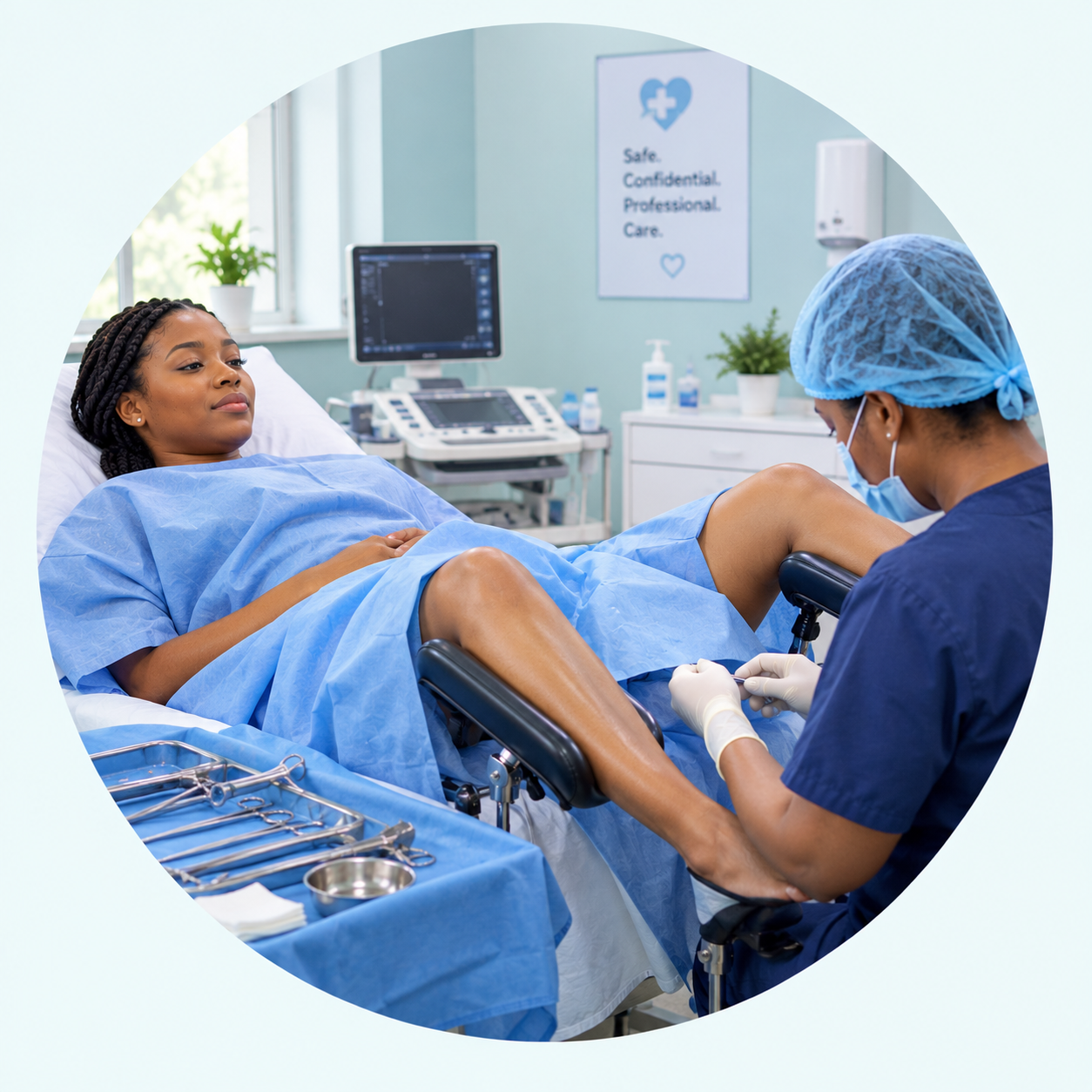
A surgical abortion is a safe, short, in-clinic medical procedure that ends a pregnancy by gently removing pregnancy tissue from the uterus. Despite the name, it does not involve any cutting, surgical incisions, or stitches
Do I need permission to have an abortion?
No. In South Africa, you do not need parental permission to have an abortion, even if you are under 18. Healthcare professionals may encourage you to speak to a trusted adult for support, but parental consent is not legally required.
What should I expect after taking abortion pills?
Cramping and bleeding are expected during a medication abortion. Nausea, diarrhoea, chills, or a temporary fever may also occur. Follow your healthcare provider's instructions for aftercare and follow-up.
How long does the abortion process take?
The timing varies depending on the abortion method and how far along the pregnancy is. With medication abortion, cramping and bleeding often begin within hours of taking the second medication, although the timing varies. Your healthcare provider can explain what to expect and when to seek medical advice.
WHERE WE PROVIDE CARE
Where to Access Safe Abortion Services
- Public Healthcare (Free): Designated government hospitals and Community Health Centres (CHCs) offer safe, free abortion services. You can visit your local public clinic to be assessed or get a referral.
2- Private Providers (Paid): If you prefer private care, choose certified, legal non-profits like WomensMedic Health Centers. They offer affordable abortion services with several branches across South Africa.
- Unskilled Providers:- If you prefer private care, choose certified, legal non-profits like
⚠️ Safety Notice: Avoid buying abortion tablets from informal street vendors or providers that cannot provide appropriate medical assessment and follow-up care.
What Are Unsafe Abortions?
The World Health Organization (WHO)’s definition of unsafe abortion is:
- An abortion is unsafe when it is carried out either by a person lacking the necessary skills or in an environment that does not conform to minimal medical standards, or both.
When women face an unplanned pregnancy and cannot access safe abortion care, some may turn to unsafe methods that put their health and lives at risk.
How to Recognize Unsafe Abortion Methods
When women face an unplanned pregnancy and can not access safe abortion care, some may turn to unsafe methods that put their health and lives at risk.
Unqualified providers: People who offer abortion services without appropriate medical training or qualifications, including individuals advertising services in public places without clear evidence of their credentials.
Dangerous Instruments: Inserting objects such as sticks, knitting needles, or wire hangers into the vagina to try to terminate a pregnancy.
- Harmful Substances: Drinking bleach, turpentine or other toxic substances in an attempt to end a pregnancy.
Abortion After-care
- At-Home Recovery & Pain Management: Rest as much as possible during the first 24 to 48 hours. You can use pain relievers such as ibuprofen, if suitable for you, or place a warm hot water bottle on your lower abdomen to help relieve cramps.
- What to Avoid: Use sanitary pads to monitor your bleeding. Follow your healthcare provider’s advice about using tampons or menstrual cups, swimming, bathing, heavy lifting, and vaginal intercourse during recovery.
- Warning Signs (Seek Urgent Medical Care): Contact a healthcare professional or hospital immediately if you experience severe pain that is not relieved by medication, heavy bleeding (soaking through more than two maxi pads per hour for two consecutive hours), a fever of 38°C or higher, or foul-smelling vaginal discharge.
Post-Abortion Care
Contraception & Family Planning
Under South Africa’s Choice on Termination of Pregnancy Act, abortion is legally available on request during the first 12 weeks of pregnancy. You do not need to provide a reason.
- 13 to 20 Weeks: A termination is allowed if a medical practitioner determines that the pregnancy poses a risk to the woman's physical or mental health.
- After 20 Weeks: A termination is permitted only if the pregnancy endangers the woman's life or poses a risk of injury to the fetus.